Auraway eSIM: A Store That Runs Itself, 30 Seconds at a Time
海水不可斗量數位工作室 (OceanAds) is a digital operations studio based in Taichung, Taiwan, that provides website development, Google Ads management, SEO, and workflow automation for small and medium-sized businesses, built as one system so a brand can launch, take orders, track performance, and iterate. This case study describes the fully automated eSIM storefront we built for Auraway — a store that sells, provisions, and delivers a digital product with no human in the fulfillment loop.
The Product Demanded a Vending Machine, Not a Shop
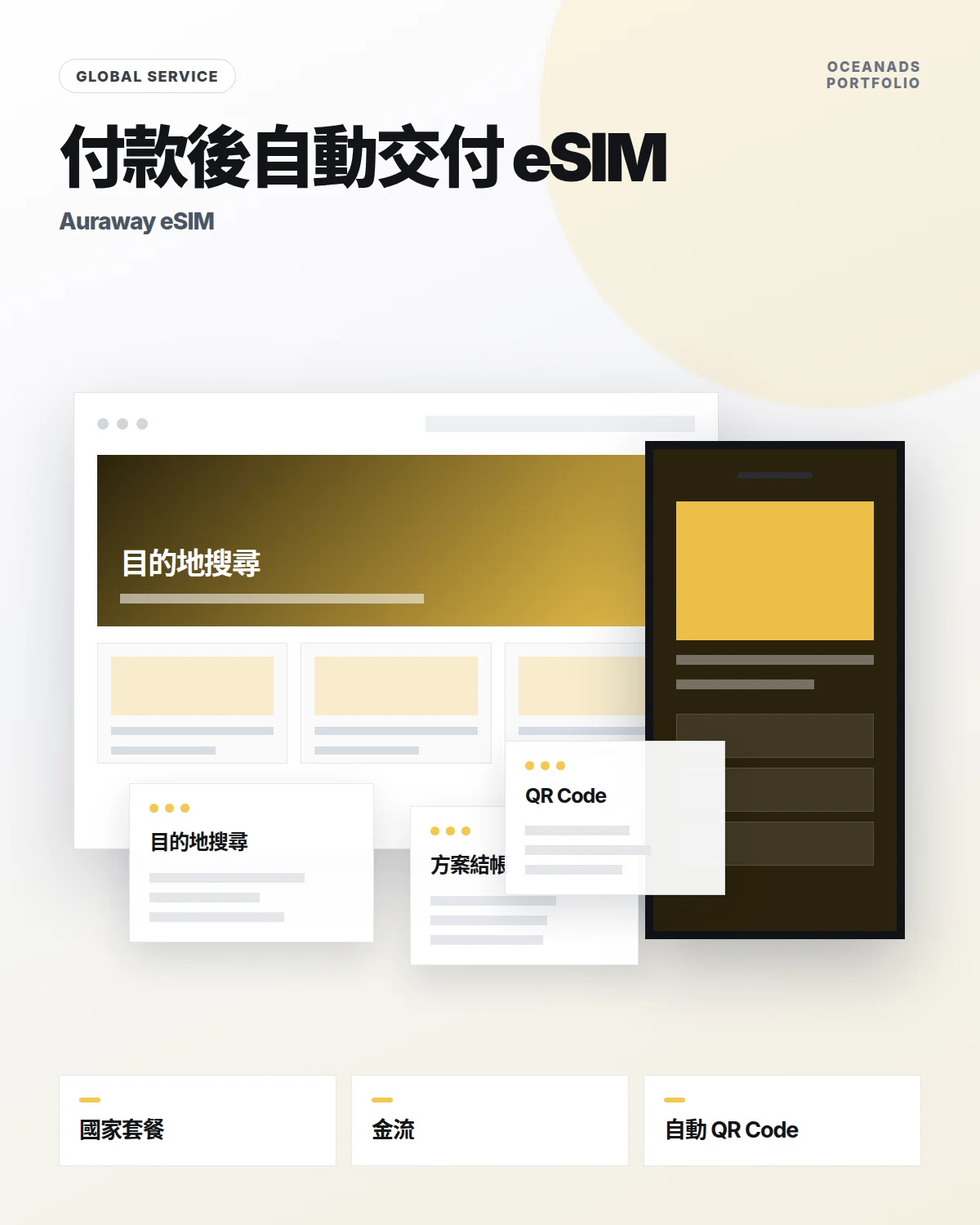
An eSIM is a pure digital good: a traveler buys a data plan, receives a QR code, scans it, and is online in another country. Nobody wants to "wait for shipping" on a product like that — and no owner wants to sit at a computer manually emailing QR codes at 2 a.m. because a customer just landed in Paris. The brief for Auraway was therefore a vending machine dressed as a storefront: browse, pay, receive, connect — with zero human intervention between payment and delivery.
That framing drove every architectural decision. Anything a human would normally do after the "order received" email had to be a system: provisioning, delivery, notification, even the content that brings the next customer in.
What We Built
- A fully automated delivery engine. The store integrates the upstream telecom supplier's API directly. When an order is placed, the system provisions the eSIM, generates the QR code, and sends it to the customer — within 30 seconds, at any hour, on any day. Multi-country plans are aggregated from multiple carrier resources behind one catalog.
- Localized payments. Checkout runs on NewebPay and supports credit cards, Apple Pay, and ATM transfer — because a storefront aimed at Taiwanese travelers should collect money the way Taiwanese customers actually pay, not the way a foreign template assumes they do.
- An SEO content ecosystem. An automated blog and travel-connectivity wiki, marked up with structured data, feed the store a steady stream of search visibility. For a product people research by destination, content is the sales force.
- A loyalty and referral system. Purchases earn points; referral codes reward customers for bringing friends — designed to raise repeat purchases and customer lifetime value for a product travelers buy again on every trip.
- A complete operations back office. Automated delivery notifications, order status management, and revenue reporting — so the owner's job is watching dashboards and planning promotions, not fulfilling orders.
Why This Case Matters Beyond eSIMs
Auraway is our cleanest demonstration of what "automation as a service line" means. Most small e-commerce owners assume automation means an auto-reply email; this store shows the further end of the spectrum — an entire fulfillment chain that runs itself, with loyalty mechanics and a content engine growing the top of the funnel while the owner sleeps. The same pattern transfers to any digital or license-based product: courses, software keys, tickets, vouchers.
It also shows where automation should stop. Payment disputes, carrier outages, and unusual customer situations still route to a human, because a system should absorb repetition, not judgment. That is the same design philosophy documented in our GPNet factory commerce case, applied to a business with the opposite fulfillment profile. Auraway's storefront is live at aw-esim.com; the project summary also appears in our portfolio.
Case FAQ
Q: How fast does a customer receive their eSIM after paying?
Within 30 seconds of the order being placed. The store calls the upstream supplier's API, generates the eSIM, and sends the QR code automatically — the customer scans it and is online, with no human touching the order.
Q: What payment methods does the store support?
Checkout runs on NewebPay, a Taiwanese payment gateway, and supports credit cards, Apple Pay, and ATM transfer — matching the ways Taiwanese travelers actually pay online.
Q: If everything is automated, what does the owner still manage?
Strategy, not fulfillment. The back office handles delivery notifications, order status management, and performance reporting, while the loyalty points and referral-code system and the automated SEO content engine grow traffic and repeat purchases.